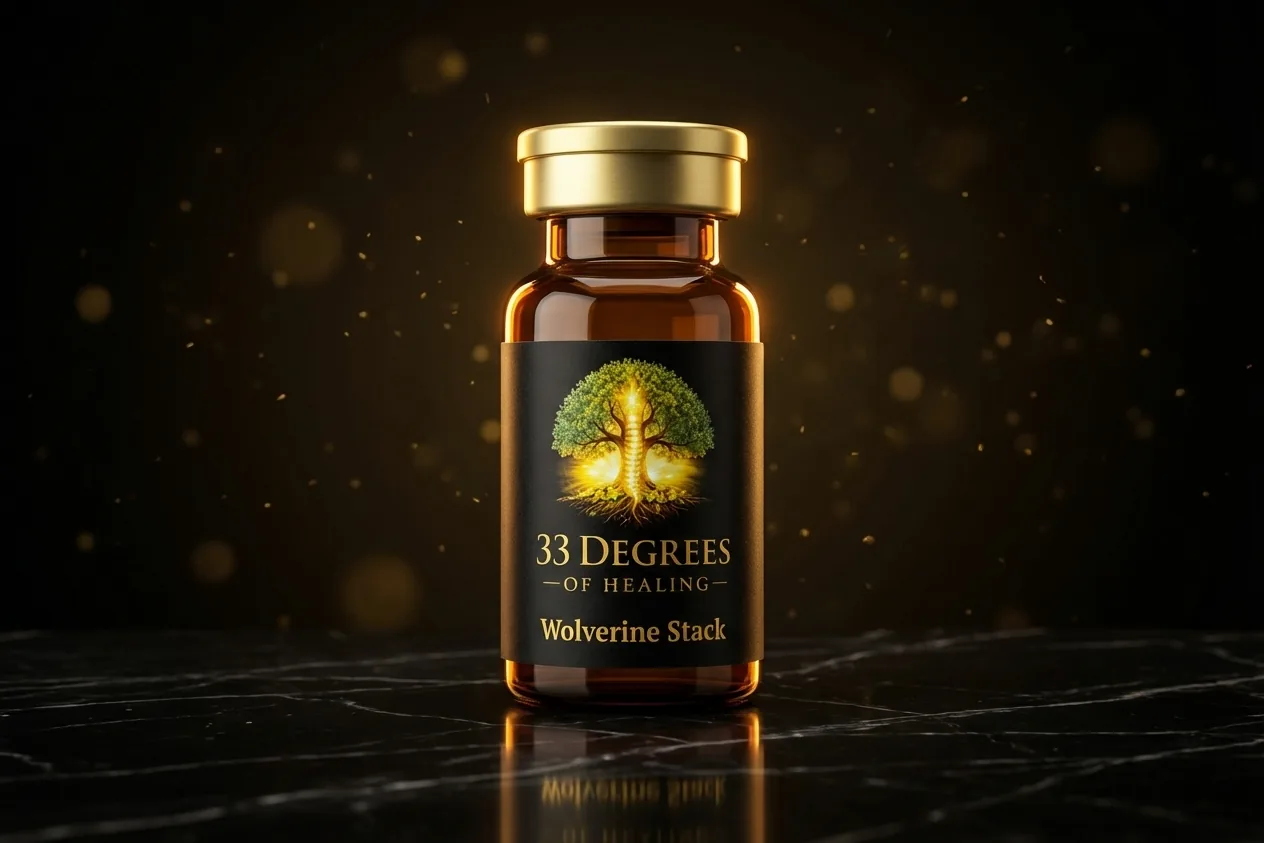
Wolverine Stack
20mg
BPC-157 10mg TB-500 10mg
Tissue Biology

Wolverine Stack

BPC-157 10mg & TB-500 10mg

$69.00
Third-Party Lab Tested
COA With Every Order
Fast U.S. Shipping
Text Email

What It Is

A dual-peptide research bundle pairing BPC-157 (10mg) with TB-500 (10mg). BPC-157 is a 15-amino-acid synthetic fragment of gastric Body Protection Compound that acts locally via FAK-paxillin signaling. TB-500 is a fragment of Thymosin Beta-4 that operates systemically by regulating actin polymerization. The two peptides address tissue repair through complementary localized and systemic pathways.

How It Works

1
BPC-157 activates localized repair signaling at the target site
2
TB-500 promotes systemic cell migration via actin regulation
3
Local and systemic pathways converge on the tissue area
4
Dual-pathway engagement supports comprehensive tissue response

What Researchers Study It For

Combined local and systemic tissue repair models
Tendon, ligament, and connective tissue research
Multi-peptide synergy investigations
Post-exercise recovery and cell migration studies

Common Research Protocols

Both peptides are supplied as lyophilized powders and reconstituted with bacteriostatic water. In preclinical studies, BPC-157 and TB-500 are typically administered via subcutaneous injection. Many published protocols use loading phases followed by maintenance schedules. The bundle format provides both compounds for dual-pathway research without requiring separate sourcing.

Community Interest Areas

The BPC-157 and TB-500 combination — commonly referred to as the "Wolverine Stack" — represents one of the most frequently studied multi-peptide protocols in the tissue repair research space. BPC-157 tends to act locally near the site of interest, while TB-500 operates systemically throughout the body. Researchers studying this pairing are interested in whether the complementary mechanisms produce additive or synergistic tissue responses compared to either peptide alone.

Dual Pathway Local (BPC-157) and systemic (TB-500) tissue repair mechanisms
Peer-Reviewed Both peptides individually studied across multiple tissue models

For research purposes only. Not intended for consumption, clinical application, or diagnostic use.