When tissue is damaged, the body initiates a complex chain of events: inflammation signals the injury, cells migrate to the site, new blood vessels form to supply nutrients, and the structural framework is rebuilt. Three peptides have become the focus of significant research interest for the roles they appear to play in these processes.
BPC-157
What it is: A synthetic 15-amino-acid peptide based on a fragment of BPC (Body Protection Compound), a protein naturally present in human gastric fluid.
How It Works
What Researchers Study It For
Common Research Protocols
In published research, BPC-157 is typically reconstituted with bacteriostatic water and administered via subcutaneous injection.
Community Interest Areas
The peptide research community has shown particular interest in BPC-157 in the context of joint and connective tissue investigations, gut barrier function studies, and post-exercise recovery models. It is frequently explored alongside TB-500 in combined protocols.
TB-500 (Thymosin Beta-4)
What it is: A fragment of Thymosin Beta-4, a naturally occurring 43-amino-acid peptide found in virtually all human cells. It plays a fundamental role in how cells move and organize themselves.
How It Works
The key difference between BPC-157 and TB-500: BPC-157 tends to act locally (near the site of interest), while TB-500 operates systemically (throughout the body). This is why they are frequently studied together.
What Researchers Study It For
Common Research Protocols
TB-500 is typically supplied as a lyophilized powder and reconstituted with bacteriostatic water. In animal studies, it is commonly administered via subcutaneous or intramuscular injection. Research dosing protocols vary, with many preclinical studies using loading phases followed by maintenance schedules. Source
Community Interest Areas
TB-500 has generated research interest in athletic recovery contexts, where its systemic action is explored alongside localized peptides like BPC-157. The combination of both represents one of the most commonly studied multi-peptide protocols in the recovery research space.
GHK-Cu (Copper Peptide)
What it is: A naturally occurring tripeptide (three amino acids) bound to a copper ion. It's found in human blood plasma, and its levels decrease significantly with age — from about 200 ng/mL at age 20 to roughly 80 ng/mL by age 60. Source
How It Works
What Researchers Study It For
Common Research Protocols
GHK-Cu is studied in both injectable and topical formats. In preclinical research, it is reconstituted from lyophilized powder with sterile water. Topical applications have been explored in dermatological research contexts, while subcutaneous administration is used in systemic studies. A genome-wide analysis identified over 4,000 genes whose expression is influenced by GHK-Cu. Source
Community Interest Areas
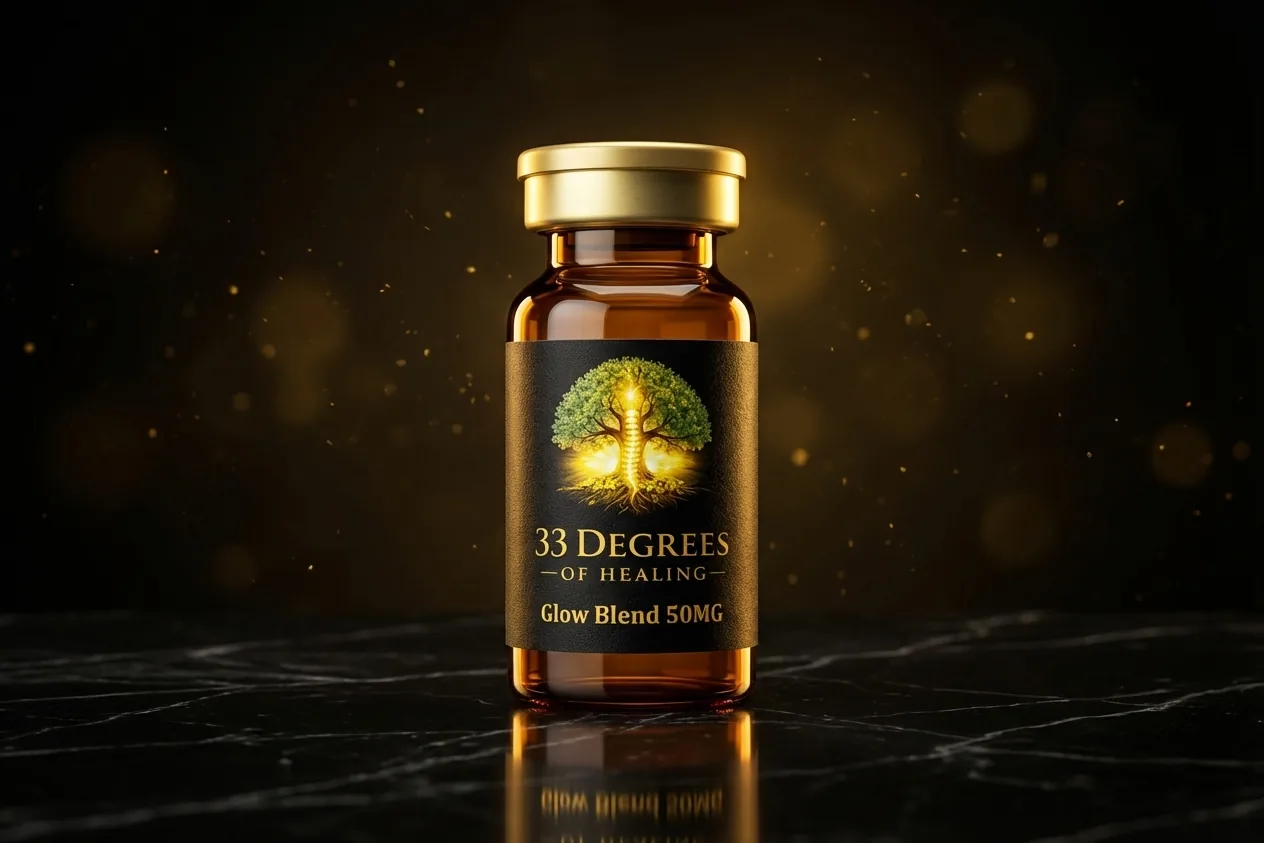
GHK-Cu draws significant research interest in the areas of skin biology, hair follicle signaling, and age-related tissue changes. It is a key component in the "Glow Blend" formulation (BPC-157 + TB-500 + GHK-Cu), which combines tissue signaling peptides with collagen-influencing copper peptide for multi-pathway investigation.
How They Compare
Key Takeaways
- BPC-157 is studied for localized tissue response through the FAK-paxillin and VEGFR2-Akt-eNOS signaling pathways
- TB-500 operates systemically by modulating actin dynamics and cell migration across tissue types
- GHK-Cu activates copper-dependent enzymes that influence collagen synthesis and matrix remodeling, with levels that decline with age
- All three are frequently studied together in multi-peptide research protocols, reflecting the redundant architecture of tissue repair signaling
- The statements made on this website have not been evaluated by the U.S. Food and Drug Administration (FDA). All products sold by 33 Degrees of Healing are provided strictly for research, laboratory, and investigational purposes only.
Frequently Asked Questions
What is BPC-157?
BPC-157 is a synthetic 15-amino-acid peptide based on a fragment of BPC (Body Protection Compound), a protein naturally present in human gastric fluid. In published research it is typically reconstituted with bacteriostatic water and administered via subcutaneous injection, where it is studied in the context of tendon, ligament, gastrointestinal, and muscle tissue models.
What is the difference between BPC-157 and TB-500?
BPC-157 tends to act locally, near the site of interest, while TB-500 operates systemically, throughout the body, which is why they are frequently studied together. TB-500 is a fragment of Thymosin Beta-4, a naturally occurring 43-amino-acid peptide found in virtually all human cells that binds to actin and influences how cells move and organize.
What is GHK-Cu?
GHK-Cu is a naturally occurring tripeptide (three amino acids) bound to a copper ion. It is found in human blood plasma, and its levels decrease significantly with age, from about 200 ng/mL at age 20 to roughly 80 ng/mL by age 60. Researchers study it in both injectable and topical formats in the context of collagen and elastin production, wound closure mechanisms, and age-related tissue changes.
How are BPC-157, TB-500, and GHK-Cu studied together?
All three are frequently studied together in multi-peptide research protocols, reflecting the redundant architecture of tissue repair signaling. GHK-Cu is a key component in the "Glow Blend" formulation (BPC-157 + TB-500 + GHK-Cu), which combines tissue signaling peptides with a collagen-influencing copper peptide for multi-pathway investigation.
Are BPC-157, TB-500, and GHK-Cu approved for human use?
No. BPC-157, TB-500, and GHK-Cu are research chemicals that have not been approved by the FDA for human use. They are studied in laboratory and preclinical settings and are sold for research, laboratory, and investigational purposes only.
Related Research Compounds
Read the Full Scientific Review →
Sources
- Seiwerth S, et al. BPC 157 and blood vessels. Curr Pharm Des. 2019. PubMed
- Philp D, et al. Thymosin beta 4 promotes dermal wound repair. J Invest Dermatol. 2012. PubMed
- Pickart L, et al. GHK peptide as a natural modulator of multiple cellular pathways. Biomed Res Int. 2015. PMC
- Pickart L, et al. Regenerative and protective actions of the GHK-Cu peptide. Int J Mol Sci. 2018. PMC
- Malinda KM, et al. Thymosin beta4 accelerates wound healing. J Invest Dermatol. 1999. PubMed
This article is for educational and research purposes only. It is not intended as medical advice. The compounds discussed are research chemicals not approved by the FDA for human use. Always consult qualified professionals and review current regulations before conducting any research.