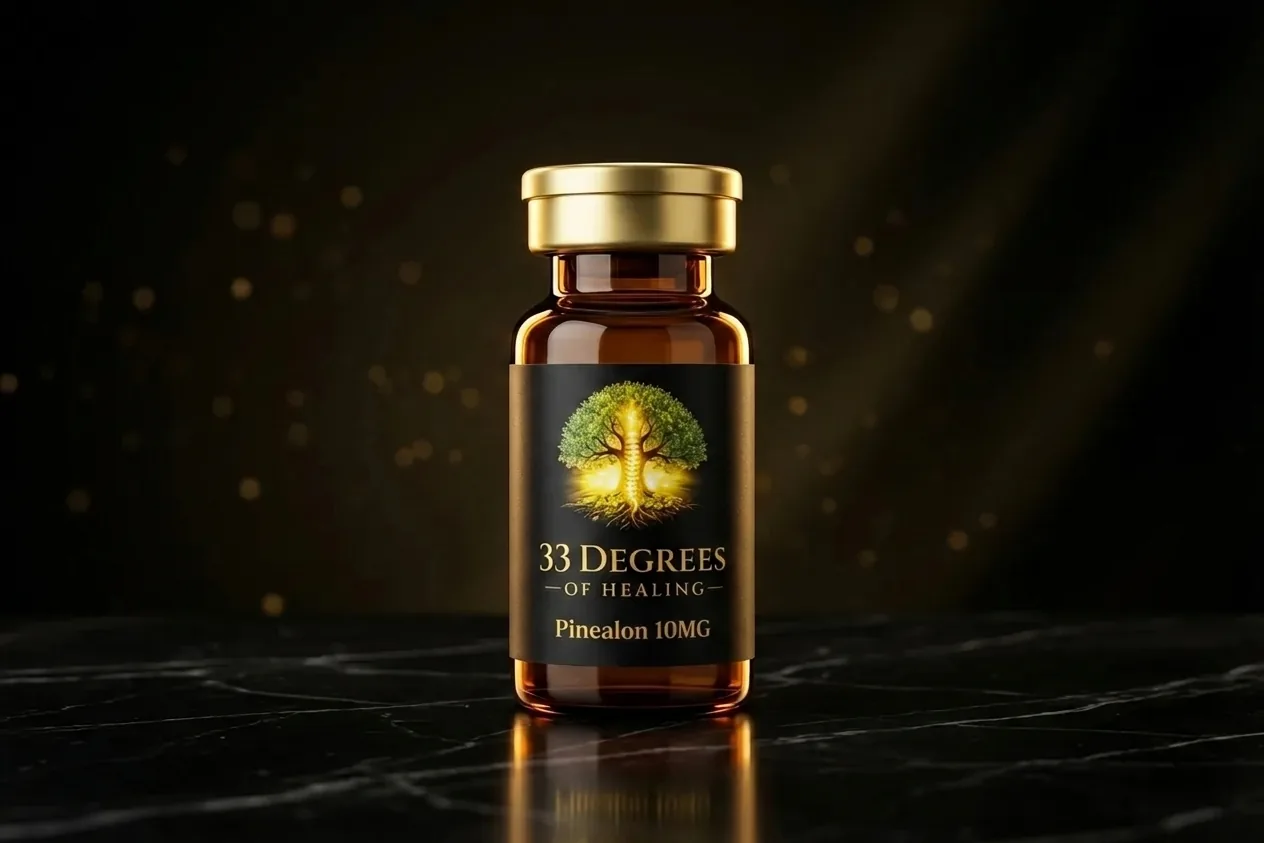
Pinealon
10mg
Pinealon 10mg
Cellular Aging

Pinealon

Bioregulator Research

$49.00
Third-Party Lab Tested
COA With Every Order
Fast U.S. Shipping
Text Email

What It Is

Pinealon is a synthetic tripeptide (glutamate-aspartate-arginine, Glu-Asp-Arg) belonging to the class of short-peptide bioregulators originally derived from pineal-gland research. It is studied primarily for its interactions with neuronal cell models and its examined role in oxidative-stress and gene-expression pathways within the central nervous system.

How It Works

1
Pinealon reaches the neuronal cellular environment
2
The short peptide is examined for interaction with nuclear DNA and regulatory regions
3
Expression of antioxidant and neuronal-protection–associated genes is studied
4
Markers of oxidative stress in neuronal cell models are evaluated

What Researchers Study It For

Neuronal cell survival and oxidative-stress research
Peptide bioregulator gene-expression mechanisms
Cognitive and memory research paradigms (animal models)
Circadian and pineal-pathway investigations

Common Research Protocols

Pinealon is supplied as a lyophilized powder and reconstituted with bacteriostatic water. In preclinical research it is typically administered by injection and studied for effects on neuronal oxidative-stress markers and behavioral endpoints in animal models.

Community Interest Areas

Pinealon is studied within the broader class of Khavinson short-peptide bioregulators and draws interest in neuroscience research for its examined interactions with neuronal cell models. It is often investigated alongside other pineal-derived peptides such as Epithalon.

3 Amino Acids Synthetic tripeptide (Glu-Asp-Arg) in the short-peptide bioregulator class
Neuronal Models Studied for oxidative-stress and gene-expression mechanisms in neuronal cell research

For research purposes only. Not intended for consumption, clinical application, or diagnostic use.