Pinealon is a short-peptide bioregulator studied mainly in neuroscience research, where it is examined for its interactions with neuronal cell models and its role in oxidative-stress pathways. This overview explains what Pinealon is, how researchers describe its mechanism, and what it is studied for, all within a strictly research-focused frame.
Pinealon is also written as EDR, after the single-letter code for its three amino acids. Both names refer to the same molecule, so you will see them used interchangeably in the literature.
What It Is
Pinealon is a synthetic tripeptide made of the amino acids glutamate, aspartate, and arginine (Glu-Asp-Arg). It belongs to the class of short-peptide bioregulators originally derived from pineal-gland research, the same family that includes Epithalon.
Its main point of interest for researchers is its studied role in the central nervous system: how it interacts with neuronal cell models and how it relates to reactive oxygen species and gene-expression pathways under oxidative stress.
How It Works
This mechanism is described as it appears in laboratory and preclinical studies. It reflects what is measured in cell cultures and animal models, not an established outcome in humans.
What Researchers Study It For
These are the areas that appear most often in the Pinealon literature. Each is an investigational research direction, a question being studied, not a demonstrated benefit or an approved use.
Common Research Protocols
Pinealon is supplied as a lyophilized powder and reconstituted with bacteriostatic water. In preclinical research it is typically administered by injection and studied for effects on neuronal oxidative-stress markers and behavioral endpoints in animal models.
In cell-model research, Pinealon has been reported to reduce the accumulation of reactive oxygen species and to support cell viability under oxidative-stress conditions. Source
Community Interest Areas
Pinealon is studied within the broader class of Khavinson short-peptide bioregulators and draws interest in neuroscience research for its examined interactions with neuronal cell models. It is often investigated alongside other pineal-derived peptides such as Epithalon.
Pinealon vs. Epithalon
Pinealon and Epithalon are both pineal-derived short-peptide bioregulators, and they are frequently mentioned together. They are, however, distinct compounds studied for different pathways.
Frequently Asked Questions
What is Pinealon?
Pinealon (also called EDR) is a synthetic tripeptide made of three amino acids, Glu-Asp-Arg. It belongs to the class of short-peptide bioregulators first characterized in pineal-gland research. In laboratory studies it is examined mainly for its interactions with neuronal cell models and its role in oxidative-stress and gene-expression pathways in the central nervous system.
What is Pinealon made of?
Pinealon is a tripeptide composed of glutamic acid, aspartic acid, and arginine (Glu-Asp-Arg). It is often referred to by the single-letter sequence EDR. It is a synthetic short-peptide bioregulator, not an extract.
What do researchers study Pinealon for?
Reported research areas include neuronal cell survival and oxidative-stress research, peptide bioregulator gene-expression mechanisms, cognitive and memory research paradigms in animal models, and circadian and pineal-pathway investigations. These are investigational areas studied in laboratory and preclinical settings, not approved uses.
How is Pinealon different from Epithalon?
Both are pineal-derived short-peptide bioregulators, but they are distinct compounds. Pinealon is a tripeptide (Glu-Asp-Arg) studied mainly for neuronal cell models and oxidative stress in the central nervous system. Epithalon is a tetrapeptide (Ala-Glu-Asp-Gly) studied mainly for telomerase and telomere length.
How is Pinealon used in research protocols?
In published studies Pinealon is typically supplied as a lyophilized powder, reconstituted with bacteriostatic water, and administered by injection in preclinical and animal models. Endpoints often include neuronal oxidative-stress markers and behavioral measures. It is intended for research use only and is not for human consumption.
How much does Pinealon cost?
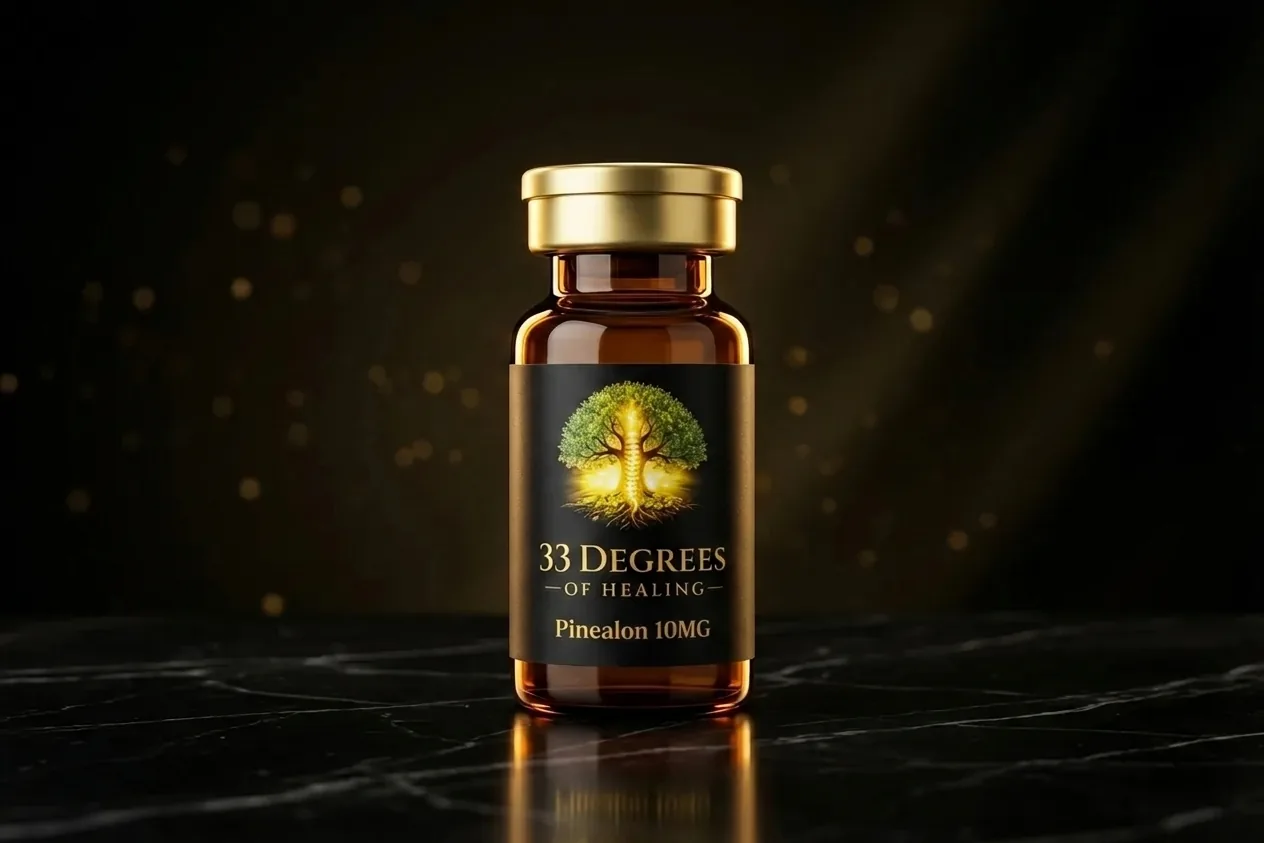
Research-grade Pinealon is available from 33 Degrees of Healing at 99% purity with a third-party certificate of analysis. See the Pinealon product page for current pricing and availability. All products are sold for research, laboratory, and investigational purposes only.
Key Takeaways
- Pinealon (EDR) is a synthetic tripeptide, Glu-Asp-Arg, in the Khavinson short-peptide bioregulator class
- It is studied primarily for neuronal cell models and its relationship to oxidative stress and gene expression in the central nervous system
- Reported research areas include neuronal survival, gene-expression mechanisms, cognitive paradigms in animal models, and pineal or circadian pathways — all investigational, none approved uses
- Pinealon and Epithalon are both pineal-derived short peptides but target different pathways: neuronal oxidative stress versus telomerase
- The statements made on this website have not been evaluated by the U.S. Food and Drug Administration (FDA). All products sold by 33 Degrees of Healing are provided strictly for research, laboratory, and investigational purposes only.
Related Research Compounds
Explore the Longevity Compound Guide →
Sources
- Khavinson VKh, et al. Pinealon increases cell viability by suppression of free radical levels and activating proliferative processes. 2011. PubMed
This article is for educational and research purposes only. It is not intended as medical advice. The compounds discussed are research chemicals not approved by the FDA for human use. Always consult qualified professionals and review current regulations before conducting any research.