NAD+ is one of the most discussed molecules in longevity research, and for good reason: it sits at the center of how cells produce energy and carry out repair. This overview explains what NAD+ is, how researchers describe its mechanism, and what it is studied for, all within a strictly research-focused frame.
It is also frequently discussed alongside its precursors, NMN and NR, which cells convert into NAD+. We cover that distinction in the FAQ below.
What It Is
NAD+ is nicotinamide adenine dinucleotide, a coenzyme found in every living cell. It is essential for converting food into cellular energy and for regulating key repair processes. Research indicates that NAD+ levels decline by approximately 30% between the ages of 45 and 60. Source
Much of the research interest in NAD+ comes from its role as the required cofactor for the sirtuins, a family of proteins tied to DNA repair, inflammation, and metabolism.
How It Works
This mechanism is described as it appears in laboratory and preclinical studies. It reflects what is measured in cell and animal models, not an established outcome in humans.
What Researchers Study It For
These are the areas that appear most often in the NAD+ literature. Each is an investigational research direction, a question being studied, not a demonstrated benefit or an approved use.
Common Research Protocols
In published research, NAD+ is typically studied through direct supplementation or via precursors such as NMN and NR. Preclinical studies commonly evaluate its effects on mitochondrial respiration, sirtuin activity, and markers of cellular aging. Dosing varies widely by model system and research objective. Source
Community Interest Areas
NAD+ has become one of the most widely discussed compounds in the longevity research community. Interest centers on its role as a central metabolic regulator, with researchers exploring how restoring NAD+ levels may influence aging trajectories across multiple organ systems simultaneously.
NAD+ vs. Epithalon
NAD+ and Epithalon are two of the most studied compounds in longevity research, and they are often compared. They target very different aspects of cellular aging, one through energy metabolism and one through telomeres.
Frequently Asked Questions
What is NAD+?
NAD+ (nicotinamide adenine dinucleotide) is a coenzyme found in every living cell. It is essential for converting food into cellular energy and for regulating key repair processes, and it acts as a required cofactor for the sirtuin family of proteins. In research it is studied for its central role in energy metabolism and cellular aging.
What is the difference between NAD+, NMN, and NR?
NMN (nicotinamide mononucleotide) and NR (nicotinamide riboside) are precursors that cells convert into NAD+. In published research, NAD+ is studied either directly or through these precursors. All are investigational research compounds studied within NAD+ metabolism, not approved products.
What do researchers study NAD+ for?
Reported research areas include cellular energy metabolism and ATP production, DNA damage repair pathways, sirtuin activation and the cellular stress response, and age-related metabolic decline. These are investigational areas studied in laboratory and preclinical settings, not approved uses.
Does NAD+ decline with age?
Research indicates that NAD+ levels decline by approximately 30% between the ages of 45 and 60. This is a finding reported in the literature and is one reason NAD+ is a focus of longevity research. It does not establish any outcome from supplementation in humans.
How is NAD+ used in research protocols?
In published research, NAD+ is typically studied through direct supplementation or via precursors such as NMN and NR. Preclinical studies commonly evaluate its effects on mitochondrial respiration, sirtuin activity, and markers of cellular aging. Dosing varies widely by model system. It is intended for research use only and is not for human consumption.
How much does NAD+ cost?
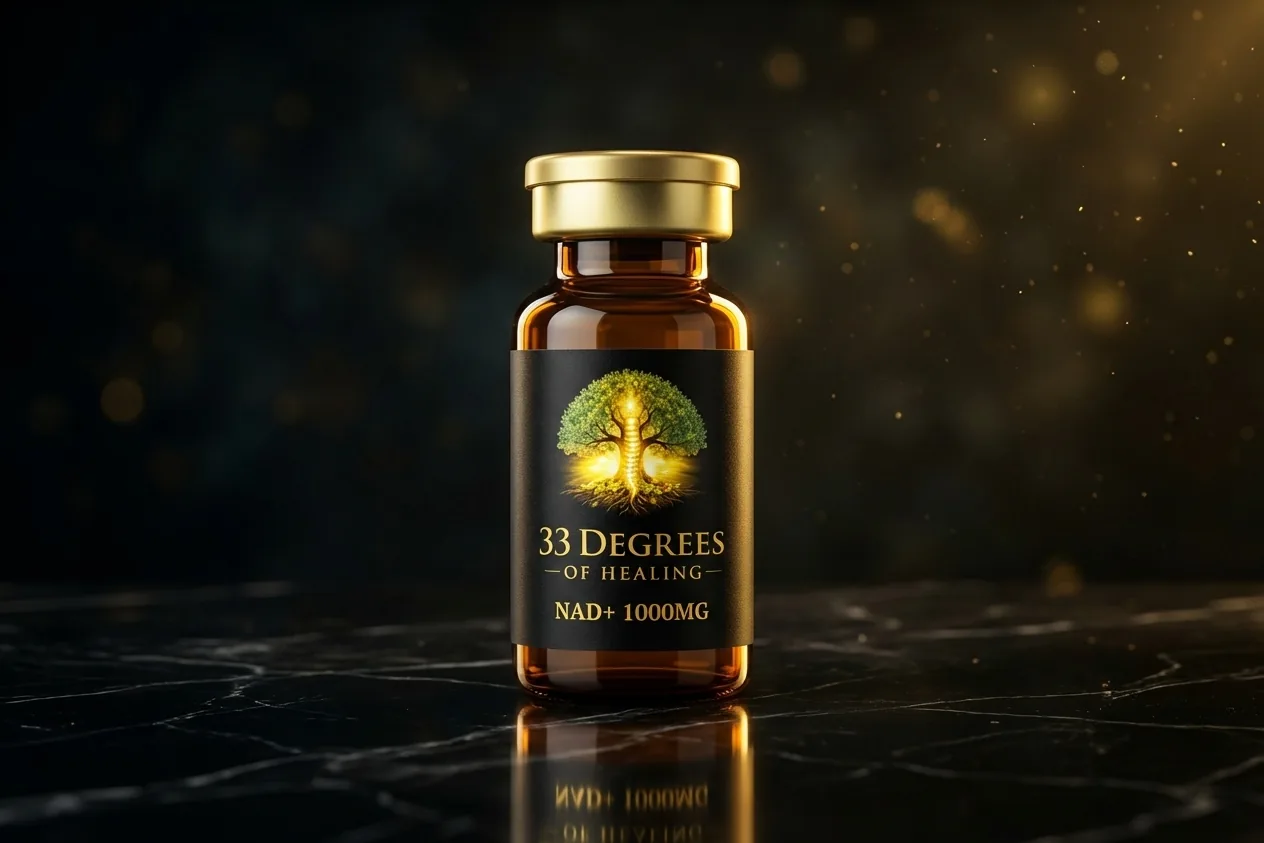
Research-grade NAD+ is available from 33 Degrees of Healing at 99% purity with a third-party certificate of analysis. See the NAD+ product page for current pricing and availability. All products are sold for research, laboratory, and investigational purposes only.
Key Takeaways
- NAD+ (nicotinamide adenine dinucleotide) is a coenzyme found in every living cell, central to energy metabolism and repair
- It is the required cofactor for the sirtuins (SIRT1 to SIRT7), which is a major focus of longevity research
- Research indicates NAD+ levels decline by roughly 30% between ages 45 and 60
- Reported research areas include energy metabolism, DNA repair, sirtuin activation, and age-related metabolic decline — all investigational, none approved uses
- The statements made on this website have not been evaluated by the U.S. Food and Drug Administration (FDA). All products sold by 33 Degrees of Healing are provided strictly for research, laboratory, and investigational purposes only.
Related Research Compounds
Read the Full Mitochondrial Cofactor Review →
Sources
- Covarrubias AJ, et al. NAD+ metabolism and its roles in cellular processes during ageing. Nat Rev Mol Cell Biol. 2021. PMC
This article is for educational and research purposes only. It is not intended as medical advice. The compounds discussed are research chemicals not approved by the FDA for human use. Always consult qualified professionals and review current regulations before conducting any research.